Rapid prototyping
Do you need to check a component before committing to final manufacture? Send your 3D model or sketch and describe the test you need. We can assess the design, prototype and checks required, including assignments for a single component.
A real project: miniature gearbox prototype
This miniature gearbox was designed by Luca Folli and produced using rapid prototyping to validate its operation. It is a practical example of the progression from mechanical design to a physical prototype.
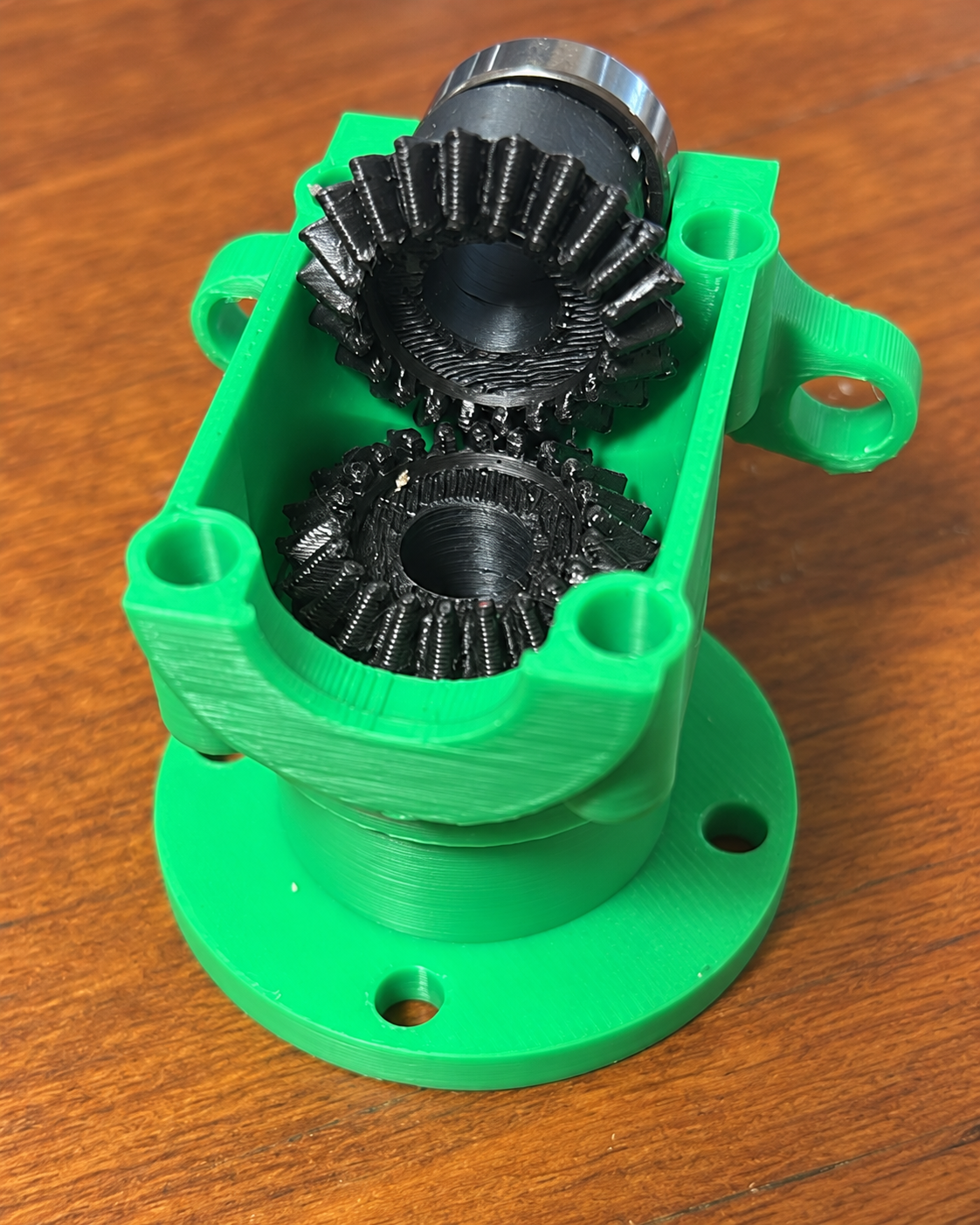
From a 3D model to a physical prototype
LF Drawings supports companies in Italy and across Europe with rapid prototyping and prototype development. A physical model can help assess a mechanical design before final production, making it easier to examine shape, clearances, assembly and interfaces between components.
The purpose of a prototype is defined at the outset. It may support a design review, check a component’s fit or help assess a mechanism. The method and material should be selected according to the question the prototype needs to answer.
What a prototype can help you check
A prototype can make it easier to compare alternative geometries, verify access for assembly and examine the relationship between components. It can also support communication between the engineering team, manufacturing partners and the people who will use the final product.
These checks can reveal changes needed before committing to a final design. A prototype is most useful when its limitations are understood and its role in the development process is clear.
Start with a coherent mechanical model
Prototype development begins with available models, drawings or an initial concept. If the geometry still needs to be developed, our 3D mechanical design with SolidWorks service can support part and assembly modelling before a physical prototype is produced.
For an existing component, the feasibility of reconstructing or revising its geometry is assessed from the available technical information. Required accuracy and intended use must be agreed before proceeding.
Choose the right method and understand its limits
Rapid prototyping, including 3D printing where appropriate, can provide a practical way to assess geometry. Material properties, surface finish, tolerances and production method influence the results. A printed model does not automatically reproduce the strength, wear resistance or performance of the final manufactured component.
Functional testing therefore requires a suitable prototype and an agreed test objective. Any subsequent manufacturing or verification activities are defined according to the project.
Prototypes for automation projects
A prototype can also be useful during development of special-purpose automatic machines, for example to examine a product interface, a mechanical movement or an assembly solution before the complete machine is built.
How to start
Send the available 3D files, drawings or sketches and describe what you want to check. Include key dimensions, expected operating conditions and desired timescale. We can then assess the information and define an appropriate next step.
Frequently asked questions
Do I need a finished 3D model?
No. The starting point can be an existing model, a drawing or a concept. Any design work required before prototyping is included in the agreed scope.
Can a prototype replace final validation?
Not automatically. The results depend on the material, method and test conditions. The prototype’s purpose and limitations must be defined.
Discuss your prototype
Contact luca.folli@lfdrawings.it, call +39 351 689 6640 or use the project enquiry form.